Understanding Disability, Access and Inclusion
Access can be thought of in physical terms – ramps and accessible toilets, Auslan interpreters, information in alternative formats. Inclusion is about attitudes. It's about how a person feels during an interaction (Caroline Bowditch 2020: 51).
Framing disability
What is a model of disability?
A model of disability is a framework for the way we think about disability (e.g., medical model, social model, human rights model, etc).
AllPlay's approach
AllPlay understands disability as a dynamic and deeply personal experience—one that cannot be reduced solely to medical or social determinants. What constitutes a symptom, disorder, challenge, or facilitator is ultimately defined by the individual.
Disability is context-dependent and developmentally shaped, influenced by a constantly changing environment.
Barriers to Access and Inclusion
Students can face many barriers in their everyday lives and in accessing dance, such as:
Physical environment
Lacking access to spaces such as a dance studio – e.g. due to stairs with no ramp, bright lights, etc.
Stigma & discrimination
Attitudes and discrimination (see more on ableism and disablism in our online teachers' course).
Societal perceptions
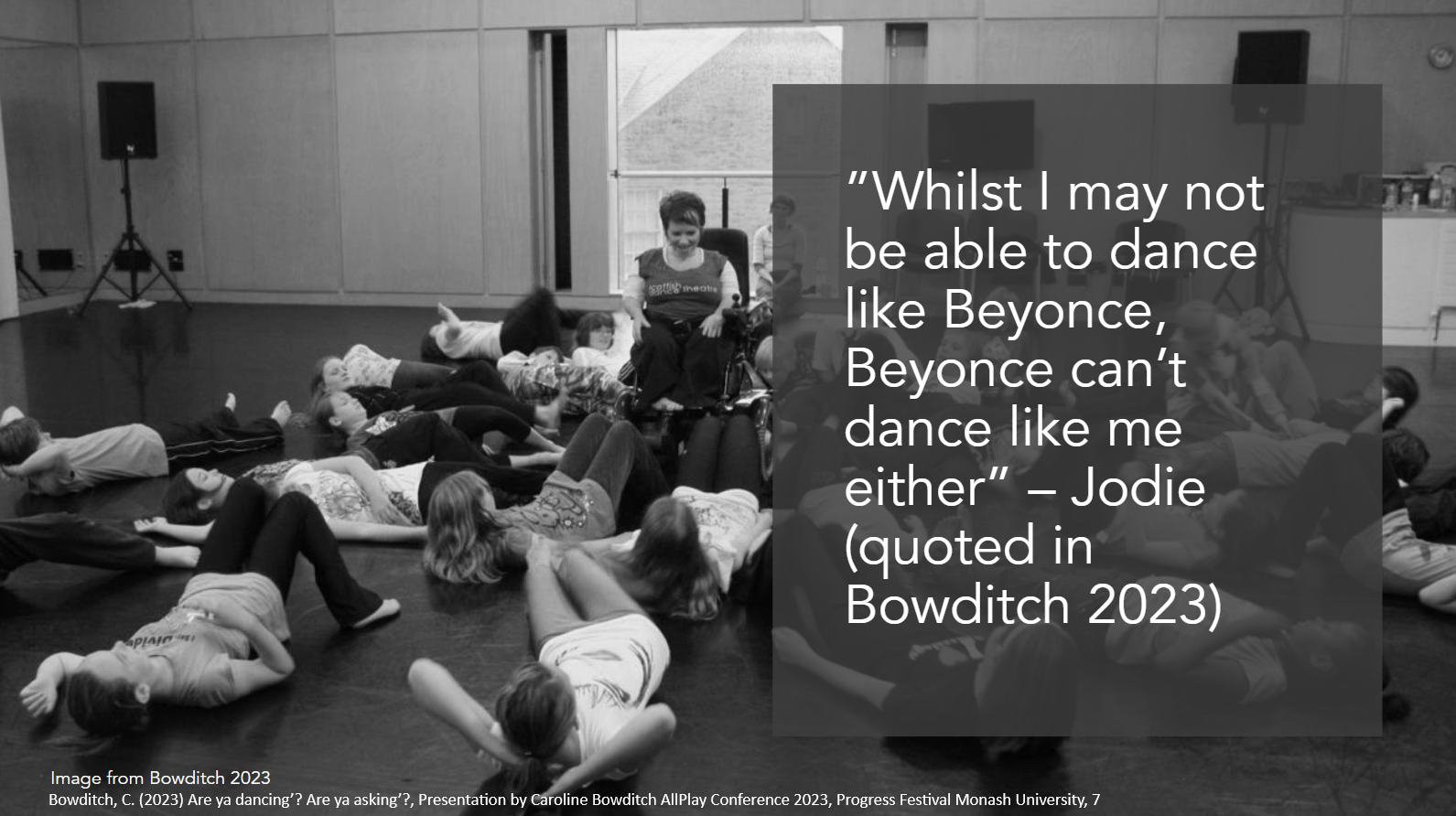
Perceptions on what dance is, who 'can' or 'can't' dance, and how a body 'should' dance.
Barriers and intersectionality
Disability doesn't exist in isolation. Factors like age, gender, and cultural background shape how people experience disability and how they're treated. For example, children and young people with disability may face stigma that silences their voices—due to both their age and disability.
Supporting a Culture of Access and Inclusion
Being led by people with lived experience
Visibility and presence of disabled leaders is a key component of the change process.— Bowditch 2020:55
True access and inclusion must be guided by people with lived experience of disability—they are best placed to lead meaningful change in culture and practice.
Teachers and schools can do this in various ways:
- • Engage with the wider disability community and listen to their voices and advocacy.
- • Create access and inclusion for teachers with disability in your school.
- • Listen to and be led by the students in your studio – they will know what they need best.
Read more about how you can help build a culture of access and inclusion in your community here.
A 'Creative Opportunity' - rethinking what dance is
We need to move away from seeing access as a drain on resources, time and quality towards seeing it as the most exciting creative opportunity we have available.— Bowditch 2020:54
Expanding our understanding of 'who can dance' and 'what dance is' is foundational to creating more accessible and inclusive dance classes.