Resources for Parents / Carers
As a parent or carer of a child with disability, there are several things you can do to support your child’s engagement in a dance class. On this page, you will find information designed to help you find the right place for your child to dance, resources to help your child prepare for their first dance class, strategies to support their journey, and see AllPlay Dance in action.
Preparing for your first dance class
A step-by-step guide
What dance would your child be interested in? Start by talking to your child about the dance style they would like to learn. Consider whether they might be more suited to the consistent routines of a style like ballet, or the more expressive focus of a creative dance class.
It is important to find a dance school that offers genuine inclusion. It may be helpful to look for one that includes a diverse range of students, so your child doesn't feel that they are the only one needing extra support.
Our AllPlay Dance Directory can support you in finding the right school for your child to dance.
Once you have found a suitable studio, it's time to prepare your child, the dance teacher, and yourself for the first dance class. Here are some tips to help you:
Prepare your child
Speak to your child about joining a dance class in advance. Consider how they might feel—excited or anxious—, what information would interest them, and put them at ease.
To help you explore the topic with your child, we have developed a page specifically for dance students. On this page, you will find a series of short and visual dance stories that you can read together. They introduce the benefits of dancing and help children and families understand what to expect.
Prepare the dance teacher
Share relevant information. Talk to the teacher about your child's needs. If you choose to share some information about your child to help the teacher support your child's learning, the AllPlay About Me Form might be helpful.
Identify risks: Some children who wish to participate in dance may be at higher risk of injury than others. Ask your child's doctor if any movements need to be avoided (e.g., jumping, rolling). Tell your child's teacher, so they can adapt the dance activities as needed. Again, the AllPlay About Me Form can be used for this.
Help the teacher to get to know your child: Schedule a time to meet with the dance teacher and talk about your child's likes, dislikes, strengths and interests.
Your child may like to join this discussion and share their experiences personally. The teacher can use this information to make a personal connection with your child and to develop dance activities that maximise their involvement.
If you or your child do not wish to disclose your child's disability, that is totally fine. The most important thing teachers need to know is the practical ways in which they can support your child.
If you notice your child requires some support in the dance class, you can discuss this with the teacher. Focus the discussion on what aspects of the class they are finding difficult, as well as noting their strengths. Continue to work together with the teacher to help your child participate fully.
Prepare yourself, the parent
It might be helpful to read through the strategies recommended for dance teachers to see how they might support your child. This might give you some ideas to share and discuss.
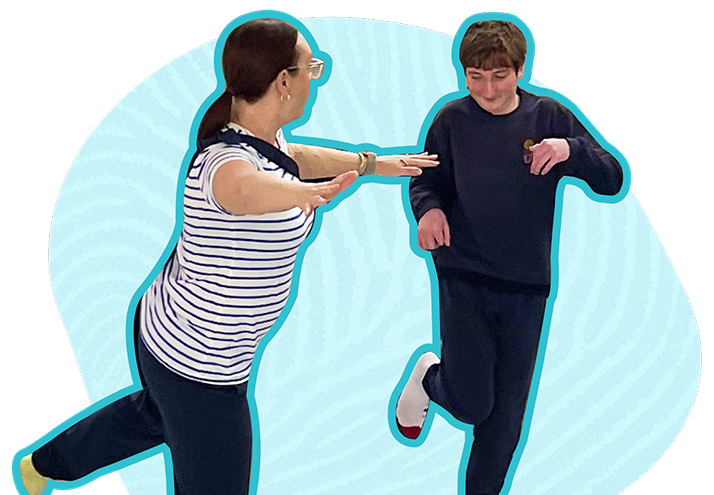
Participating in dance classes can be an opportunity for your child to experience independence. For some children, participating in the class with just the dance teacher and their peers can support building confidence. Teachers may pair children with a partner or buddy to help them feel more secure.
For other children, having a parent, sibling, aide, or caregiver in the dance class to watch or support them during the dance activities may be the best way to help them feel at ease and encourage their full participation.
Teachers may use hands-on instruction to help students learn about alignment and movement. If you or your child prefers that they are not touched, it is also important to make the dance teacher aware of this.
Some children may take a break from dance if they feel they're not progressing like their peers. This can stem from various challenges, but with the right support, they can stay engaged and thrive.
If your child seems less motivated, connect with their teacher to explore ways to re-engage them. Focus on their strengths and discuss any barriers they may be facing. Consider asking questions such as:
- - Are they finding something in the classroom environment overwhelming?
- - Is the communication style between teacher and student working?
- - Are there physical challenges?
Discuss any modifications with the teacher that incorporate your child's unique strengths and preferences. For example, the teacher may be able to adjust the music volume, lighting, or uniform requirements, modify movements, or trial a range of other strategies. The teacher may also consider pairing your child with a buddy or peers at a similar skill level, which can boost confidence and connection.
More information about these modifications can be found here.
Many dance schools are eager to support all children in enjoying the benefits of dance. Keep an open discussion between the child, parents, and teachers to find what works best.
More information about a whole dance school culture of inclusion can be found here.
AllPlay Dance in Action
Why do kids like to dance? What are some of their favourite dance moves? Watch these videos to find out.